electricians
How Much Does an Electrician Cost in Pennsylvania? 2026 Rates for Stone Houses, Rowhomes, and Old Panels
How much does an electrician cost in Pennsylvania? 2026 hourly rates, rewire and panel prices, aluminum wiring fixes, and how licensing works by town.
In This Article
- Rates From Philadelphia to the Northern Tier
- Pennsylvania Has No Statewide Electrician License
- Stone Houses, Plaster, and Rowhome Wiring
- Aluminum Branch Wiring in 1960s and 1970s Houses
- Panels, Meter Sockets, and Service Upgrades
- Heating Changes That Pull in an Electrician
- Basements, Radon Fans, and Sump Circuits
- What the Small Jobs Run
- Frequently Asked Questions
How Much Does an Electrician Cost in Pennsylvania? 2026 Rates for Stone Houses, Rowhomes, and Old Panels
Pennsylvania electricians charge roughly $90 to $160 an hour in 2026, with most residential shops quoting flat prices per job after a diagnostic visit. That first visit carries a minimum of $95 to $225 depending on the market, and it covers the trip plus the first hour on site.
There is a wrinkle here that homeowners in neighboring states do not deal with. Pennsylvania issues no statewide electrician license, so the credential behind the person in your basement depends entirely on which municipality you live in.
The housing makes the rest of the difference. Fieldstone farmhouses in Chester County, porch front rowhomes in South Philadelphia, hillside doubles in Pittsburgh, and 1970s split levels in the Lehigh Valley each present a different wiring problem, and the price follows the problem rather than the square footage.
Rates From Philadelphia to the Northern Tier
Philadelphia and its collar counties run the highest numbers in the state, generally $115 to $165 an hour. City licensing costs, permit fees, and parking realities all feed into that, and shops working inside city limits price accordingly.
Pittsburgh and Allegheny County sit lower at about $95 to $140. The market has a deep bench of small owner operated shops, which keeps competitive pressure on the larger companies advertising for the same work.
Harrisburg, Lancaster, York, and the Lehigh Valley cluster around $90 to $135 an hour. These are the markets where flat rate pricing is most common, and where a company will often quote a panel change over the phone from photos.
Rural counties in the northern tier and the northwest run $80 to $120, with a real scheduling tradeoff. Fewer licensed shops cover a lot of ground in Potter, Tioga, and Warren counties, and a non-emergency job can wait three weeks.
Pennsylvania Has No Statewide Electrician License
The state does not license electricians. Philadelphia requires an electrical contractor license through the Department of Licenses and Inspections, Pittsburgh has its own requirement, and hundreds of townships and boroughs require registration or a permit process that verifies competence in some form.
That patchwork means the phrase "licensed electrician" carries different weight in Doylestown than it does in a rural township with no local ordinance at all. Two contractors can both use the term honestly and hold entirely different credentials.
What does apply statewide is registration under the Home Improvement Consumer Protection Act. Contractors performing more than $5,000 a year in home improvement work for Pennsylvania homeowners must register with the Office of Attorney General, and that PA number is required to appear on contracts, estimates, and advertising.
What to Ask For Instead of a State License
Ask for three things: the PA home improvement registration number, the municipal electrical license or registration for the town where your house sits, and a certificate of insurance sent directly by the agency. Verifying the registration number takes under a minute on the Attorney General's contractor search.
Certification through an industry body fills in the rest of the picture. An electrician who holds a current certification from a national testing organization or carries a master electrician license from Philadelphia or another jurisdiction with an exam has demonstrated something a township permit sticker does not.
Stone Houses, Plaster, and Rowhome Wiring
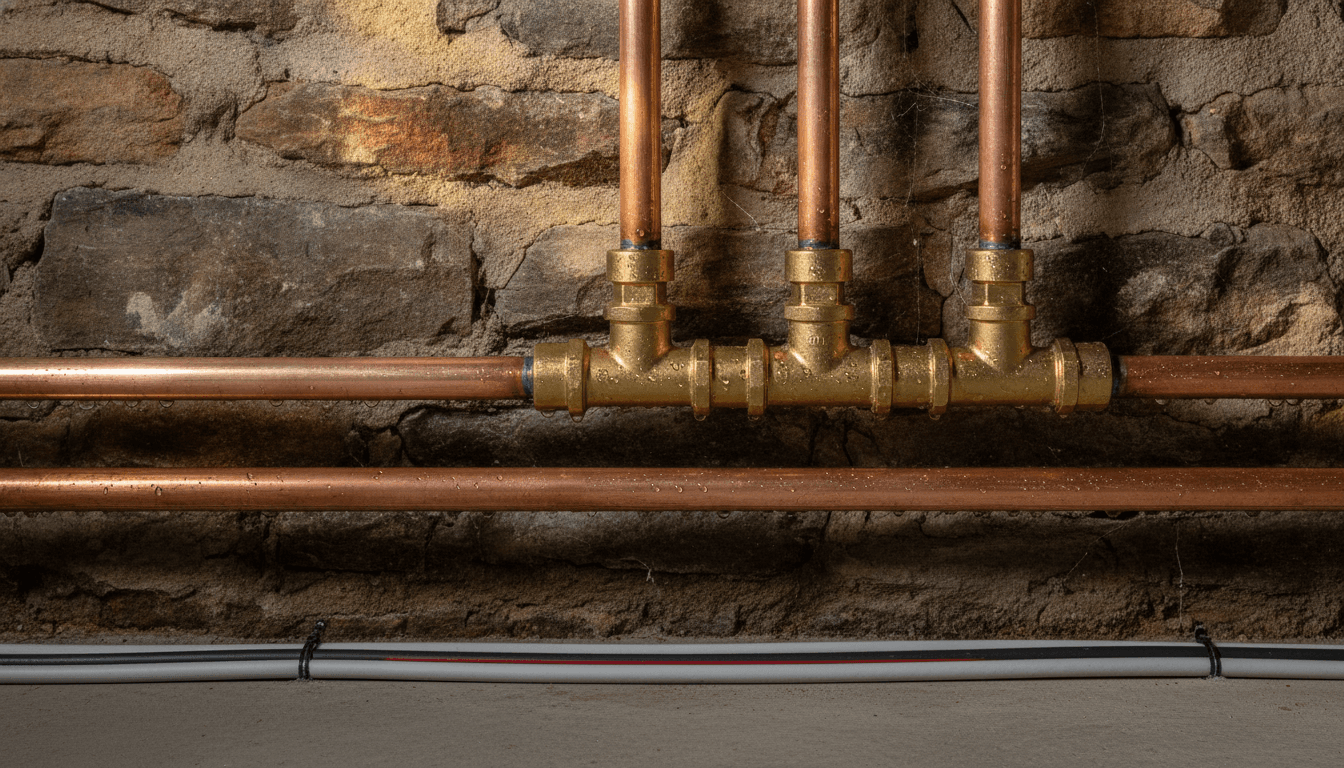
Fieldstone walls have no cavity to fish wire through. In an eighteenth or nineteenth century farmhouse around Kennett Square, Lititz, or Ligonier, running a new circuit along an exterior wall usually means surface raceway, a chase built into the trim, or accepting a route that goes the long way around through interior partitions.
Plaster on wood lath is the second obstacle. It cracks in sheets when cut carelessly, and an electrician who works on these houses charges for the patching skill along with the wiring. Expect a new circuit in a stone house to run $450 to $1,200 where the same circuit in drywall costs $250 to $500.
Philadelphia and Pittsburgh rowhomes share the access problem in a different form. Party walls block side access, basements often have six feet of headroom, and third floor bedrooms sit two floor systems away from the panel. Half a day for one circuit is normal, and quotes reflect that.
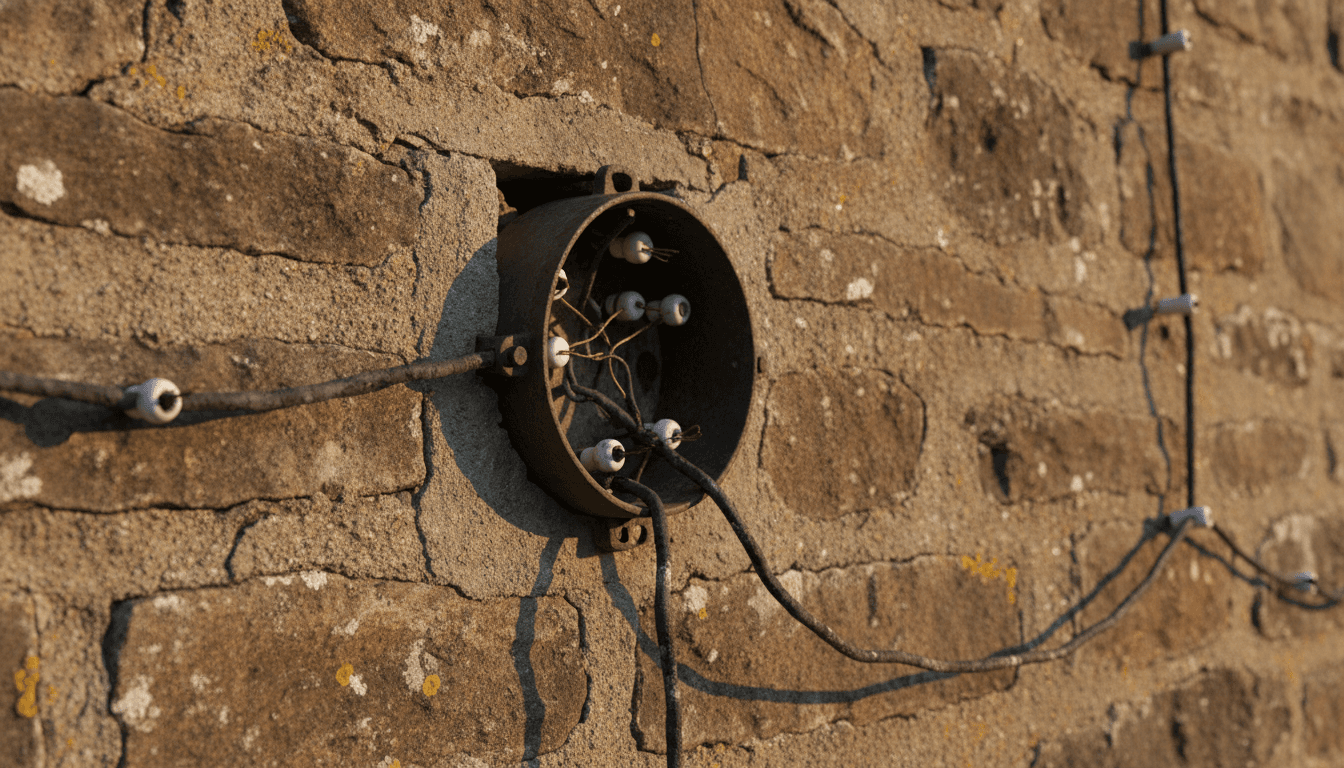
Knob and tube wiring remains live in a surprising number of these houses. It carries no ground, its insulation degrades, and insurance carriers have grown less willing to write policies over it. Replacing accessible circuits runs $3,500 to $9,000, while a full rowhome rewire generally falls between $10,000 and $25,000.
Aluminum Branch Wiring in 1960s and 1970s Houses
Homes built roughly between 1965 and 1973 often have aluminum branch circuit wiring, and Pennsylvania has plenty of them in postwar suburbs around Levittown, Monroeville, and the Harrisburg ring. Aluminum expands and contracts more than copper, so connections loosen over time and heat up at the device.
The fix is not a rewire in most cases. An electrician pigtails copper onto every aluminum termination using approved connectors, which restores a reliable joint at each outlet, switch, and fixture. Pricing usually lands at $40 to $95 per connection, or $1,800 to $4,500 for a typical three bedroom house.
Home inspectors flag aluminum branch wiring on nearly every transaction where it appears. If you are selling, getting the pigtail work done before listing removes a negotiating point that buyers routinely value higher than the repair itself.
Panels, Meter Sockets, and Service Upgrades
A 200 amp service upgrade on a Pennsylvania single family home typically runs $2,200 to $4,800, including the panel, meter socket, service mast, and grounding. Utility coordination with PECO, Duquesne Light, PPL, or Penelec adds days to the schedule that the electrician does not control.
Rowhome service work costs more and takes longer. Masonry drilling, shared service entrances, and sidewalk conduit push a city service change toward $3,000 to $6,000, and Philadelphia's permit and inspection process adds its own timeline.
Certain older panels get flagged on sight during a sale. Stab-Lok equipment made by Federal Pacific and the Zinsco line both have long records of breakers that stay closed under fault, and buyers routinely ask for replacement as a condition of settlement. A straight panel swap with no service change runs $1,400 to $3,000.
Older meter sockets on stone and brick exteriors sometimes cannot be reused. Replacing one means masonry work and a utility disconnect appointment, adding $400 to $1,000 to a job that looked simple on the estimate.
Heating Changes That Pull in an Electrician
Pennsylvania burns more heating oil than most states, and homeowners replacing an oil boiler with a heat pump usually discover the electrical scope late. A cold climate heat pump plus an electric backup coil can require a 200 amp service where the oil system ran on almost nothing.
Budget the electrical separately from the HVAC quote. A dedicated heat pump circuit runs $600 to $1,600, and if the service needs upgrading first, add the panel numbers above before deciding whether the conversion pencils out.
Gas heated homes face a smaller version of the same issue. A high efficiency furnace or a tankless water heater with electronic ignition needs a dedicated circuit and often a nearby receptacle, which is $250 to $600 of electrical work bundled into a mechanical job.
Wood and pellet stove installations bring their own requirement. Pellet stoves need a dedicated 15 or 20 amp circuit and a battery backup is worth adding in areas with frequent outages, running $400 to $900 installed.
Basements, Radon Fans, and Sump Circuits
Radon is common across much of Pennsylvania, particularly along the Reading Prong through Berks, Lehigh, Montgomery, and Bucks counties. A mitigation system needs a fan on a dedicated circuit, and code keeps that fan out of livable space, so it goes in the attic or on the exterior.
Wiring for a radon fan typically costs $200 to $500 as a standalone electrical job, and mitigation companies often subcontract it. Ask whether the quoted mitigation price includes permitted electrical work or whether that arrives as a separate invoice.
Sump pumps deserve their own dedicated GFCI protected circuit rather than sharing with the freezer. Adding one runs $300 to $700, and a battery backup pump with its own charger circuit adds $600 to $1,600 depending on the unit.
Finished basements bring the largest basement electrical bills. A subpanel, egress lighting, GFCI and AFCI protection, and enough receptacles to meet spacing rules typically totals $1,800 to $5,000 before the drywall goes up.
What the Small Jobs Run
Bundling several small items onto one visit is the easiest money a Pennsylvania homeowner saves. The trip charge gets paid once the truck is at the curb, so most shops discount the second and third task on the same call.
Typical installed prices for routine residential work around the state:
- Swap an outlet, switch, or dimmer: $140 to $290
- Run one new circuit and receptacle through drywall: $250 to $500
- Hang a ceiling fan on an existing rated box: $180 to $420
- Add recessed cans to a finished ceiling: $175 to $350 per fixture
- Replace a tripping GFCI or AFCI device: $150 to $325
- Mount a Level 2 EV charger within reach of the panel: $650 to $1,500
- Pull a 240 volt line for a range, dryer, or welder: $400 to $1,100
- Add panel level surge protection: $300 to $700
Permit fees vary by municipality and third party inspection agency, commonly $75 to $250 for residential electrical work. Getting three bids from licensed electricians serving your area on the same written scope makes a padded quote obvious.
Contract terms matter as much as the price. Under state law a home improvement contract over $500 has to be in writing, deposits are limited to a third of the contract price plus special order materials, and you have three business days to cancel. Our home service pricing guides for Pennsylvania homeowners cover the same contract checks for roofing and HVAC work.
Frequently Asked Questions
Do electricians need a license in Pennsylvania?
Not from the state. Licensing sits with municipalities, so Philadelphia and Pittsburgh issue their own electrical contractor licenses while some townships require only registration, and anyone doing over $5,000 a year of home improvement work is required to register with the Attorney General's office.
How much does it cost to rewire a house in Pennsylvania?
A 1,600 square foot suburban home in drywall generally runs $8,000 to $16,000, while a three story rowhome or a stone farmhouse with plaster walls commonly reaches $25,000. Doing it during a gut renovation cuts the price considerably because the walls are already open.
What does a panel upgrade cost?
A 200 amp service change on a single family home runs $2,200 to $4,800, and a panel swap without touching the service is $1,400 to $3,000. Federal Pacific and Zinsco panels are the two most common replacement triggers in Pennsylvania inspection reports.
Will switching from oil heat to a heat pump require electrical work?
Almost always. Plan on a dedicated circuit at $600 to $1,600, and check the existing service size first, since many oil heated homes still run a 100 amp panel that cannot carry a heat pump with electric backup.
Who pulls the permit for electrical work?
The contractor does, through your municipality or the third party agency it uses for code enforcement. Work done without a permit tends to surface during a sale, and the buyer's inspector is a worse time to find it than today.