tree-service
How Much Does Tree Removal Cost in Pennsylvania? 2026 Prices by Tree Size, Access, and County
Tree removal cost in Pennsylvania for 2026: price bands by size, dead ash surcharges, crane work, stump grinding, storm rates, permits, and estimate terms.
In This Article
- What the Size Bands Look Like in Real Dollars
- Why Pittsburgh and Philadelphia Quotes Differ From Everywhere Else
- Storm Work and What Emergencies Cost
- Permits, Ordinances, and the Registration You Should Check
- What Should Be Written on the Estimate
- Trees Pennsylvania Homeowners Remove Most
- Questions Pennsylvania Homeowners Ask About Tree Removal Pricing
How Much Does Tree Removal Cost in Pennsylvania? 2026 Prices by Tree Size, Access, and County
A single mature tree taken down in Pennsylvania runs somewhere between $650 and $2,900 in 2026, and the spread inside that range has almost nothing to do with the tree itself. It has to do with what sits under the tree, how close the drop zone is to a wall or a driveway, and whether a truck can reach the trunk.
Pennsylvania also has a tree problem the rest of the country does not talk about much. Emerald ash borer went through the state's ash population over the past decade and left millions of standing dead stems, most of them brittle, most of them near houses and roads. Dead ash costs more to remove than a live tree of the same size, because a climber will not trust the limbs and the crew has to bring in a bucket or a crane.
What the Size Bands Look Like in Real Dollars
Crews price by height, trunk diameter, and lean, then adjust for everything else. A backyard dogwood or a young maple under 30 feet usually lands at $250 to $600, and most companies will not roll a truck for less than about $350 unless they are already on your street.
The 30 to 60 foot band covers a lot of Pennsylvania yards: Norway maple, silver maple, black locust, mid-age oak. Expect $700 to $1,600 with the wood cut and hauled. Leave the rounds stacked at the curb and you can often knock $100 to $200 off the bid.
Above 60 feet the numbers climb fast. A big white oak, a tulip poplar, or an old sycamore over a house typically runs $1,800 to $4,500, and the largest specimens in older Philadelphia and Pittsburgh neighborhoods can pass $6,000 when a crane is the only safe method.
Dead ash gets its own math. Add 20 to 40 percent over a live tree of the same size, since the crew is working a stem that can shed limbs without warning and often has to work from a bucket rather than climbing.
Stump Grinding Is Almost Always Separate
Very few Pennsylvania quotes include the stump. Grinding is priced by diameter at ground level, usually $3 to $6 per inch, with a $125 to $175 minimum for the trip.
A 30 inch oak stump therefore lands around $120 to $180 if the grinder is already on site the same day, and closer to $250 if the company has to come back. Grinding leaves a pile of chips, and hauling those away plus bringing in topsoil adds $75 to $200.
Crane Days Change the Whole Bid
Rowhome blocks in Philadelphia, hillside lots in the Pittsburgh neighborhoods, and tight Main Line properties often leave no place to drop wood. A crane picks the sections straight up and swings them to the street, which turns a two day dismantle into a four hour job.
The crane itself runs $1,200 to $2,500 for a half day in most of the state, and the crew rate goes up alongside it. Counterintuitively, the total can still be lower than a slow climbing removal, so ask any company that quotes you a very high climbing price whether a crane pick would be cheaper.
Why Pittsburgh and Philadelphia Quotes Differ From Everywhere Else
Allegheny County terrain does something to tree prices that flat states never see. Half the lots in Mount Washington, Squirrel Hill, and the North Side sit on grades where the tree is 40 feet below or above the only truck access, and the chipper cannot get to the brush.
Philadelphia adds a permitting layer instead. Street trees inside the city belong to Parks and Recreation, and removing one without written approval brings a fine plus a replacement requirement, no matter who planted it.
Central and northern counties price lower across the board. The same 70 foot oak that costs $3,200 in Bryn Mawr often runs $1,900 in Williamsport or Altoona, mostly because insurance, labor, and dump fees are cheaper outside the two metros.
Winter is the quiet season and the bargain season. January through early March is when crews have open calendars, the ground is frozen enough to keep heavy equipment from rutting a lawn, and bare canopies make rigging faster. Many outfits will take 10 to 15 percent off a non-urgent removal booked in that window.
Storm Work and What Emergencies Cost
Pennsylvania gets remnants of Gulf hurricanes in late summer, derecho-style straight line winds in July, and heavy wet snow in the Poconos and the Laurel Highlands. Each of those puts trees on roofs.
Emergency response, meaning a crew that comes out the same day or overnight, generally starts around $1,500 and runs to $4,000 for a tree on a structure. Overnight and weekend rates commonly add 50 percent, and a tree tangled in a service drop cannot be touched until the utility de-energizes the line.
Your homeowners policy usually pays when a tree hits an insured structure. It usually does not pay when a tree falls in the yard and hits nothing, which surprises a lot of people standing over a $2,000 pile of oak in their side yard.
Call the power company first if wires are involved, then the tree company. PPL, PECO, Duquesne Light, and the rural cooperatives all clear their own conductors at no charge to you, and the tree crew's price drops once the hazard is gone.
Permits, Ordinances, and the Registration You Should Check
There is no statewide tree removal permit in Pennsylvania for a tree on your own property. The rules live at the municipal level, and they vary enough that a call to the township office is worth five minutes.
Shade tree commissions operate in many boroughs and first class townships, and they control anything in the right of way, which typically extends several feet past the sidewalk toward your house. Lower Merion, Radnor, Abington, and dozens of others require an application before a curb strip tree comes down.
Steep slope and riparian buffer ordinances catch people near creeks. Municipalities in the Chesapeake and Delaware watersheds often restrict clearing within 35 to 100 feet of a stream bank, and a violation can mean replanting at your expense.
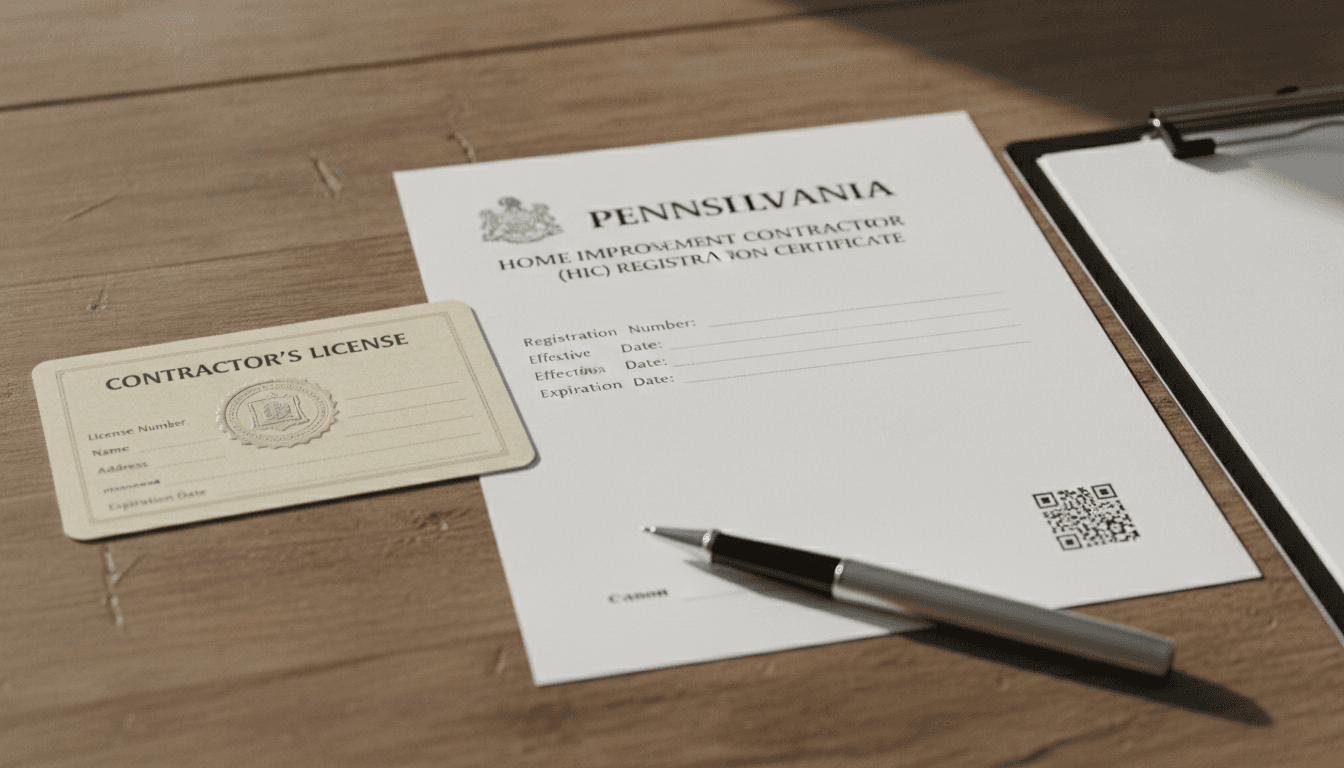
Contractor registration is the one credential to verify on every bid. Pennsylvania's Home Improvement Consumer Protection Act requires most contractors doing more than $5,000 of residential work per year to register with the Attorney General's office, and the PA number belongs on the written estimate.
Anyone who cannot produce that number, or who cannot email a certificate of insurance naming general liability and workers compensation, should not be on your property. You can compare local crews on our directory of tree service companies and start with the ones carrying both.
What Should Be Written on the Estimate
Verbal quotes cause most of the disputes in this trade. Get the scope on paper before anyone starts a saw, and read the four lines that matter.
The estimate should say whether wood is hauled or left, whether brush is chipped, whether the stump is ground and to what depth, and what happens to the chips. Six inches of grind depth is standard and fine for lawn; if you are replanting in the same hole, ask for 12 to 18 inches and expect to pay more.
Lawn protection is the fourth line. Bucket trucks and grinders leave ruts in soft Pennsylvania clay, and the honest companies say up front that they will put down plywood or mats and that some turf repair may still be needed.
Deposits above 25 percent are a warning sign. Established companies bill on completion, and the storm chasers who show up door to door after a wind event are the ones asking for cash in advance.
Trees Pennsylvania Homeowners Remove Most
Ash leads the list by a wide margin and will for another few years. If you have a standing dead ash within falling distance of anything you care about, get it down before it gets more brittle, since the price only goes up as the wood degrades.
Bradford pear is second. The species splits at the crotch under ice and wind, usually around year 20, and Pennsylvania has a lot of 1990s subdivisions hitting exactly that age. Removal runs $500 to $1,200 for a typical specimen.
Eastern hemlock removals have picked up in the northern tier and the Poconos because of hemlock woolly adelgid. Treatment is possible and often worth it on a valuable specimen, and a certified arborist can tell you in one visit whether a $250 soil injection beats a $2,000 removal.
Silver maple rounds out the list. It grows fast, drops limbs, and lifts sidewalks, and city crews across the state have been taking them out of curb strips for years. Homeowners with one in the front yard should read more of our seasonal maintenance and pricing guides on the blog before deciding between removal and a heavy structural prune.
Questions Pennsylvania Homeowners Ask About Tree Removal Pricing
Does homeowners insurance pay to remove a fallen tree?
Generally only when the tree damages a covered structure, and then the removal is often capped around $500 to $1,000 within the claim. A tree that falls in open yard is almost always yours to handle, which is why the standing dead ash in the back corner is worth budgeting for now.
Is my neighbor responsible if their tree falls on my house?
In Pennsylvania, usually not, unless you can show they knew the tree was hazardous and did nothing. Send a dated letter with photos if a neighbor's dead tree leans your way, because that written notice is what changes the liability picture later.
How much does it cost to remove a tree close to power lines?
The utility handles anything touching its primary conductors at no cost to you, but the service drop running to your own house is your responsibility. Expect $200 to $500 above the normal price for the coordination and the temporary disconnect.
What is a fair price to just trim a large tree instead?
Structural pruning on a mature Pennsylvania hardwood typically runs $450 to $1,300 depending on height and how much deadwood comes out. On a healthy 60 year old oak that is money well spent, since a good prune buys another decade.
Do I need a permit to cut down a tree in my own backyard?
In most townships, no. Check anyway if you live in a borough with a shade tree commission, sit within 100 feet of a stream, or own property in a development with an HOA that recorded tree covenants.