pressure-washing
How to Choose a Pressure Washing Company in Pennsylvania: A 2026 Homeowner's Guide
From freeze-thaw damage to algae on shaded siding, here is how Pennsylvania homeowners can vet, question, and price a pressure washing company in 2026.
In This Article
- What Pennsylvania Weather Does to Siding, Brick, and Concrete
- Soft Washing or Pressure Washing? The Difference Matters on Older Homes
- Insurance Comes Before the Ladder
- How a Fair Quote Is Put Together
- The Pennsylvania Washing Calendar
- Red Flags That Predict Damage or a No-Show
- Questions Worth Asking Before You Book
- Pressure Washing Questions Pennsylvania Homeowners Ask
How to Choose a Pressure Washing Company in Pennsylvania: A 2026 Homeowner's Guide
Pennsylvania is rough on the outside of a house. Rain and snowmelt work into hairline cracks in concrete all fall, freeze and expand dozens of times over the winter, and by April the driveway wears a new web of damage. The same cycle loosens mortar joints, pops paint, and lifts the edges of siding.
Summer brings the other half of the problem. Humidity feeds green algae on shaded, north-facing walls from Erie down to Philadelphia, and mildew spreads across damp porch ceilings and vinyl soffits through July and August. A house that looked clean in May can look neglected by Labor Day.
Washing all of that off is simple work that is easy to do badly. The wrong machine at the wrong setting will etch concrete, force water behind siding, and peel paint that was holding on fine. This guide covers how to find a company that cleans your home without leaving marks on it.
What Pennsylvania Weather Does to Siding, Brick, and Concrete
Freeze-thaw damage is the signature Pennsylvania problem. Harrisburg and Allentown see dozens of nights each winter where the temperature crosses the freezing line, and every crossing pushes moisture a little deeper into concrete, brick, and mortar. Dirty surfaces make it worse, because algae and grime hold water against the material longer.
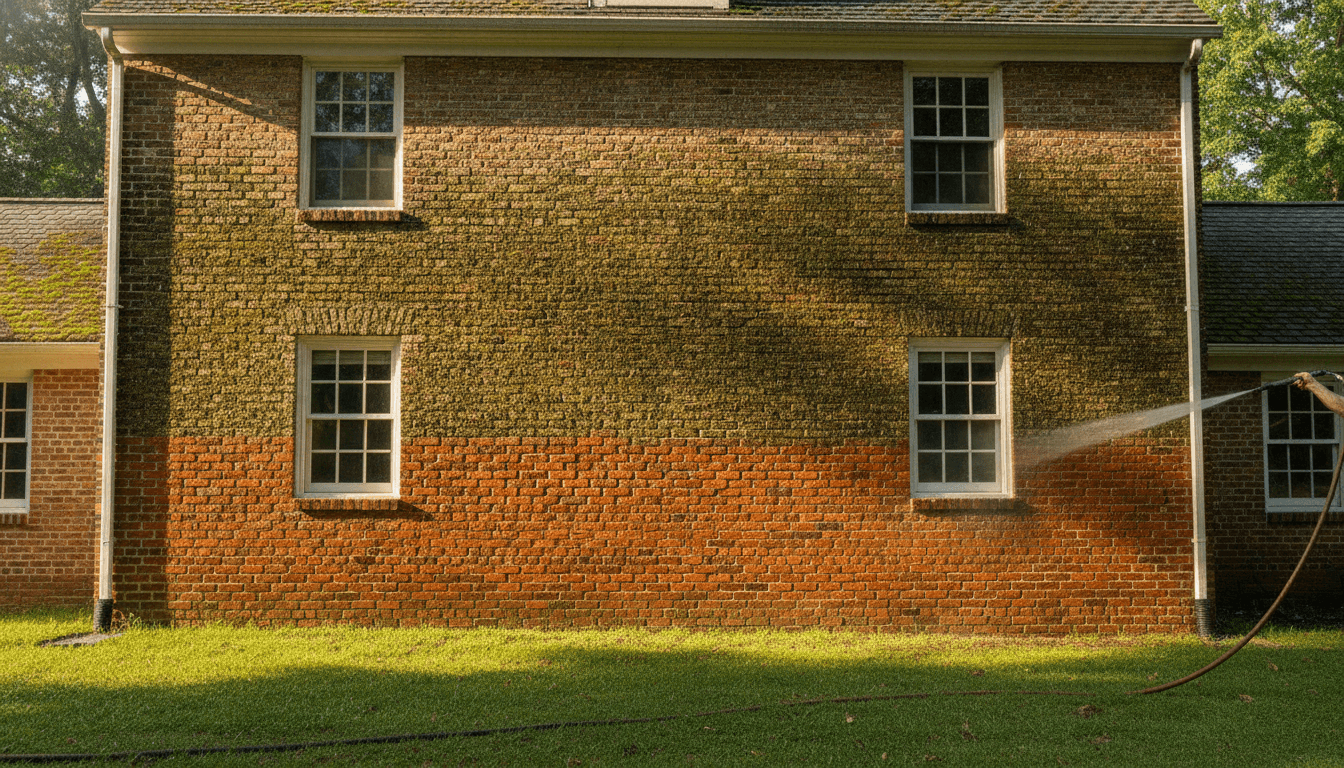
Algae is the second offender. The green film on your siding is a living organism, and it spreads fastest on north and east walls where the sun never fully dries the surface. In wooded suburbs around Pittsburgh and in Erie neighborhoods near the lake, a wall can go from clean to green in a single wet season.
Moss and mildew finish the list. Moss holds moisture against roof shingles and lifts their edges, which shortens the roof's life, while mildew stains wood decks and fences until they turn gray.
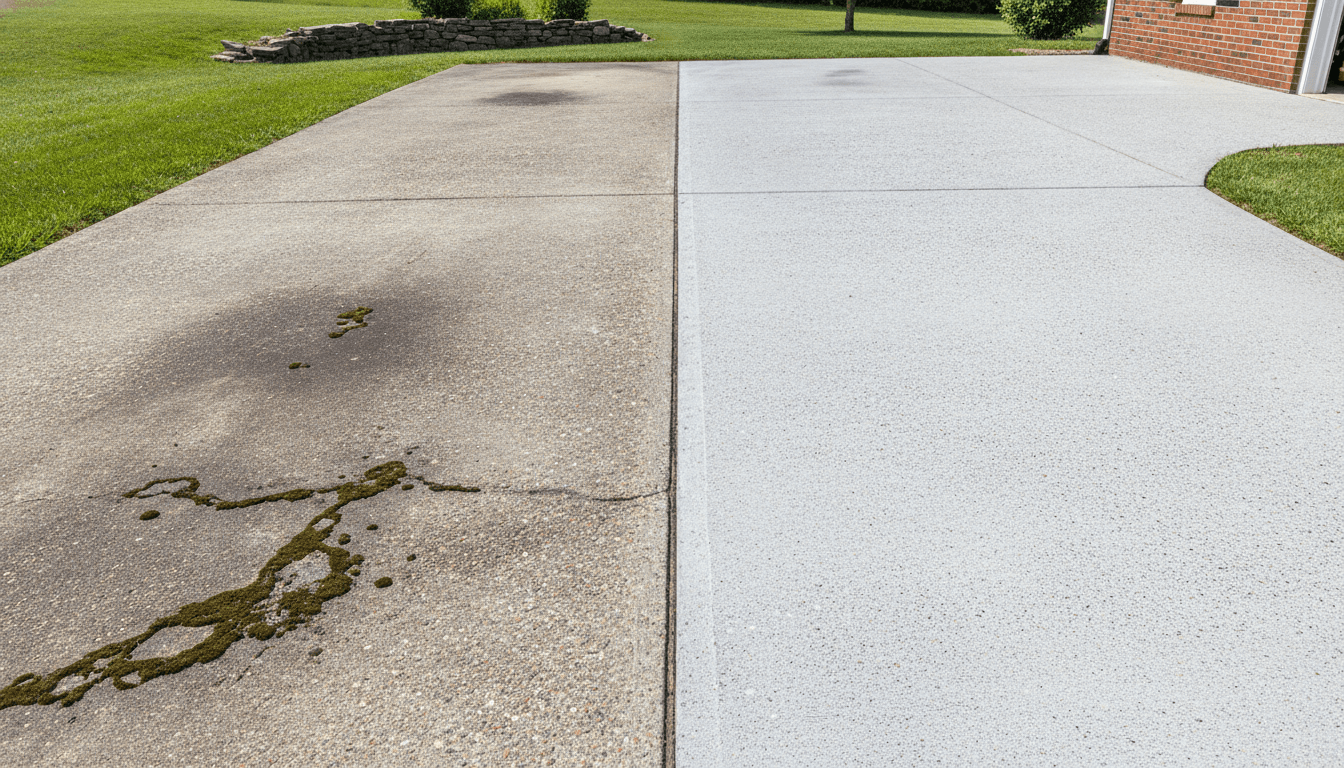
Concrete takes the beating hardest. A driveway that goes into winter coated in grime comes out a little worse every spring, and a proper cleaning followed by sealing is the cheapest way to slow that cycle down. Regular washing here is maintenance, the same category as gutter cleaning, and skipping it for years has a repair bill attached.
Soft Washing or Pressure Washing? The Difference Matters on Older Homes
Soft washing runs at low pressure, close to the strength of a garden hose, and does its work with a detergent mix that kills algae and mildew at the root. Pressure washing relies on force, typically 2,000 to 3,500 PSI, and belongs on hard surfaces like concrete, pavers, and stone.
The distinction matters more in Pennsylvania than in newer parts of the country because so many older homes here predate modern materials. Philadelphia rowhomes often carry soft historic brick that high pressure will pit and scar for good. Pittsburgh's older brick and painted wood trim share that weakness, and century-old farmhouse clapboard in the central counties can be gouged by a careless wand in seconds.
Detergent choice separates careful companies from careless ones too. Sodium hypochlorite mixes handle organic growth well, but they burn plants and streak windows when applied sloppily, so ask how crews wet down and rinse landscaping before and after treatment.
A good company will tell you, unprompted, which method it plans to use on each surface. Vinyl siding, roofs, and old masonry should get the soft wash treatment nearly every time, with high pressure reserved for flatwork. If a contractor runs one machine at one setting for the whole property, keep looking.
Insurance Comes Before the Ladder
General liability coverage of at least $1 million is the baseline for a legitimate exterior cleaning company. Ask for a certificate of insurance sent directly from the insurance agent rather than a photocopy, because lapsed policies are common in this trade.
Workers' compensation matters just as much. If an uninsured worker falls from a ladder on your property, the claim can land on your homeowner's policy instead of the company's. One question on the phone sorts this out before anyone shows up.
References beat photos. Any crew can show a gallery of clean driveways, but a homeowner nearby who will vouch for how the company handled a problem is worth ten before-and-after shots.
Pennsylvania does not issue a trade license for pressure washing, so paperwork and reputation carry the screening weight. Search the company name plus "complaints," read the recent reviews rather than the star average, and ask for two references from jobs completed nearby in the past year. A company that has washed houses around Allentown or Harrisburg will hand over names without hesitation.
How a Fair Quote Is Put Together
Most Pennsylvania companies price flatwork by the square foot and house washes as a flat rate per service. Driveways and patios typically run $0.15 to $0.35 per square foot, which puts a standard two-car driveway around $120 to $220. A full soft wash on an average two-story home usually lands between $300 and $550.
Roof cleaning costs more because of the risk and the chemicals involved, often $400 to $800 for a typical roof. Decks and fences are usually quoted by the linear foot or as a small flat job, commonly $150 to $350.
Location moves these numbers. Quotes in Philadelphia and its collar counties tend to run 10 to 20 percent above the same job in Erie or a smaller central Pennsylvania town, and rural properties sometimes carry a travel fee.
Bundling saves money. Pairing the house wash with the driveway or a deck in one visit typically trims 10 to 15 percent off the combined price, since setup and travel are the expensive parts of a small job.
Whatever the format, get it in writing. The quote should list each surface, the method for each, and whether gutter brightening, window rinsing, or sealing costs extra, because vague one-line quotes are where surprise charges live.
The Pennsylvania Washing Calendar
Late April through October is the working season, and the edges of it are the smart windows. A spring wash clears winter grime and gets ahead of the summer algae bloom, while a September or October visit removes a season of growth before it spends the winter holding moisture against your siding.
Erie deserves its own note. Lake-effect weather shortens the reliable washing window there by several weeks on both ends, so local crews concentrate their bookings between mid-May and early October.
Avoid having concrete cleaned right before a hard freeze, since rinsed flatwork needs dry days afterward. Book earlier than feels necessary, because crews in the Allentown and Harrisburg markets often run two to three weeks out from May through September.
A few companies wash year-round on milder winter days, and off-season discounts of 10 to 15 percent are common when a warm week opens up. Our seasonal home maintenance guides cover timing for related exterior projects if you are mapping out a bigger year of work.
Red Flags That Predict Damage or a No-Show
A door-knocker offering a same-day discount because the crew is "already in the neighborhood" is the classic setup for bad work. Established washing companies book ahead and do not hunt for jobs door to door.
Cash-only pricing, a quote far below every competitor, and any hesitation around insurance belong on the same list. So does anyone who promises to pressure wash a shingle roof, since shingle manufacturers warn that high pressure strips granules and voids warranties.
Communication before the job predicts communication during it. If it takes four days and two follow-up calls to get a number, expect the same energy when a window screen goes missing or a shrub gets burned by detergent.
Questions Worth Asking Before You Book
What PSI will you use on my siding is the opening question, and the answer you want mentions soft washing or numbers well under 1,000 for siding. Follow with what detergents they use, whether those are plant-safe, and how they protect landscaping, outlets, and light fixtures during the wash.
Ask who does the work, an employee or a subcontractor, and how long the crew has been washing homes. Then ask what happens if something breaks, because that answer reveals whether a real claims process exists before you need one.
Close by requesting the estimate in writing with the method listed for each surface. Companies that soft wash siding and save high pressure for concrete will say so plainly, and you can build a call list from the Pennsylvania pressure washing listings on this site to compare three answers side by side.
Pressure Washing Questions Pennsylvania Homeowners Ask
How often should a Pennsylvania home be washed?
Every one to two years for most homes, and annually for shaded lots or houses under heavy tree cover. North-facing walls in humid river towns like Harrisburg often regrow algae within 12 to 18 months.
Will pressure washing damage old brick?
It can. Brick fired before roughly 1930, common in Philadelphia rowhomes and older Pittsburgh neighborhoods, is softer than modern brick, and pressure much above 1,000 PSI can erode both the face and the mortar. Historic masonry should be soft washed instead.
What does a full house wash cost in Pennsylvania?
Most single-family soft washes land between $300 and $550, with large homes running $600 or more. Adding the driveway typically tacks on another $120 to $220.
Can I rent a machine and do this myself?
A sidewalk or patio is a reasonable DIY project with a rental unit and some patience. Siding, second stories, and roofs are where injuries and water intrusion happen, and after the rental fee, detergent, and a full weekend, the savings over a pro are smaller than they look.